
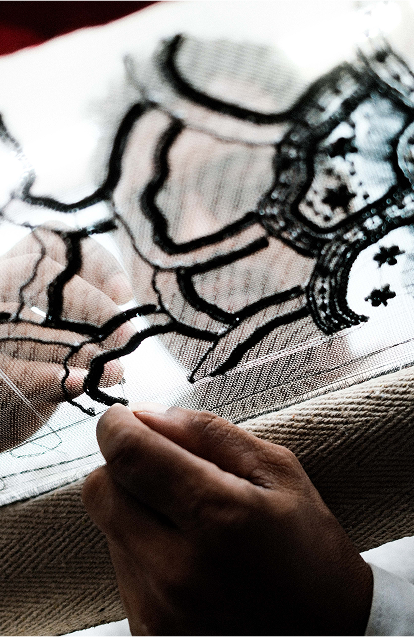
Before the first celebrity stepped out. Before the cameras flashed. Before the world started debating who wore what – India was already there. And if you’ve ever wondered what connects a Mumbai embroidery studio to the world’s most photographed red carpet, Blooming Orchid is part of that answer
Beneath the feet of fashion’s most photographed night, the carpet itself told the story. For the fourth consecutive year, the iconic Met Gala carpet was crafted by Neytt by Extraweave, a family-run weaving house from Cherthala, Kerala. Made from hand-sorted natural sisal fibre – some of it specially sourced from Madagascar – the carpet stretched across the Metropolitan Museum’s steps, carrying the quiet, unmistakable mark of Indian craftsmanship. It bore a simple tag: Made in India.
Nobody announced it. Nobody made a speech about it. And yet there it was – the foundation of the most watched red carpet in the world, woven by Indian hands. A fourth-generation business, over 109 years in the making, delivering something so precise and so exceptional that the world simply keeps returning to it.
This is how Indian craft has always worked. Not loudly. Not by asking for a seat at the table. But by being so exceptionally made that the world keeps coming back – year after year, collection after collection, generation after generation.
The Met Gala 2026 didn’t just feature Indian craft. It was built on it.
The Night Indian Craft Took Center Stage
So what was the Met Gala theme in 2026? “Fashion is Art.” And while many interpreted that through sculptural silhouettes and avant-garde materials, the Indian contingent took a different, more rooted approach – they let the artisans speak.
Isha Ambani arrived in a custom Gaurav Gupta saree that took over 1,200 hours to complete, with more than 50 craftspeople working on it. The saree border was a masterclass in Indian hand embroidery – featuring traditional zardozi and aari techniques with motifs inspired by pichwai paintings. Real gold threads ran through the fabric. The blouse was set with over 200 diamonds. This was the Met Gala equivalent of wearing a museum piece.
Karan Johar made his Met Gala debut in a Manish Malhotra creation drawn directly from the visual language of Raja Ravi Varma, one of India’s most celebrated classical painters. The dramatic cape combined vintage zardozi, three-dimensional embroidery and hand-painted gold work – each technique requiring weeks of skilled handwork. Johar himself summed up the moment perfectly: “We are not just song and dance. We are a reason.”
But it was Manish Malhotra’s own look that stopped people in their tracks. He wore a sharply cut black bandhgala, but the cape – that was the statement. Embroidered across its surface were the names and signatures of the artisans from his studio. Close to a thousand hours of hand stitching, not to showcase a pattern or a motif, but to honour the people behind the work. When asked about his inspiration, Malhotra said: “When I heard fashion is art, the first word that came to my mind was artisans.”
The celebrities were the canvas. The artisans were the art.
And even the jewels told that story. Where most Met Gala guests arrive wearing pieces lent by major jewellery houses, the Indian contingent wore privately owned heirlooms – family pieces, personal collections, things passed down. In a single evening, India made a quiet but powerful argument: real luxury is not borrowed. It is inherited.
The Craft Traditions Behind the Looks
To truly understand what was on display at the Met Gala 2026, it helps to understand the craft traditions that made it possible. These are not decorative skills. They are centuries-old disciplines, passed down within families and communities, refined over generations.
Zardozi is perhaps the most globally recognised form of Indian hand embroidery. Rooted in Mughal court culture, it uses metallic threads – traditionally real gold and silver – to create dense, intricate surface work on fabric. Today, zardozi appears on some of the most coveted couture pieces in the world, from Paris runways to red carpets. What looks like ornamentation is actually engineering – each thread placed with precise intention, each motif built stitch by stitch.
Aari embroidery uses a fine hook needle to pull thread through fabric from below, creating a continuous chain stitch. It is this technique that allows craftspeople to follow even the most intricate hand embroidery pattern with extraordinary accuracy – flowers, paisleys, figurative forms, geometric structures – all built one loop at a time. It requires years of focused training to master and cannot be replicated by machine.
Kalamkari and shola work round out the broader language of Indian craft that appeared across the Met Gala red carpet – the former a hand-painted textile tradition from Andhra Pradesh, the latter a delicate three-dimensional technique using the sponge-like pith of the shola plant.
What makes all of these traditions remarkable is not just their beauty – it is their precision. Every design is mapped by hand before a single stitch is placed. Every piece is one of a kind. There is no shortcut, no machine that replicates it, no algorithm that approximates it. These are centuries-old languages spoken in thread, and only a handful of hands in the world speak them fluently.
The Studio Behind Blooming Orchid
The world we have just described – of zardozi capes, aari-worked sarees, and hand-embroidered shawls that take hundreds of hours to complete – is not a world apart from Blooming Orchid. It is the world Blooming Orchid comes from. The same tradition that shaped what millions saw on the Indian hand embroidery Met Gala red carpet is the same tradition that lives inside every Blooming Orchid piece.
At the heart of every Blooming Orchid piece is a Mumbai-based family studio with generations of embroidery knowledge behind it. This is the same studio that has contributed to looks worn at the Met Gala and the Cannes Film Festival. The same hands that have worked with some of the most respected names in global fashion – Valentino, Dior – now bring that same level of skill and care to every handmade shawl and couture cape that leaves under the Blooming Orchid name.
Blooming Orchid was founded by Surbhi Chaudhary, who spent 15 years in Big Tech and finance before discovering this world through her husband’s family business in India. The turning point came not in a boardroom, but at a Microsoft event, when a colleague paused to admire an embroidered stole she had brought back from India. That small moment of recognition revealed something larger: people were searching for something more meaningful in what they wore. Something with a story.
What followed was not a pivot but a calling. Blooming Orchid was built to bridge two worlds – the extraordinary craft legacy of Indian artisans, and the modern woman who wants to wear something that means something. Each piece in the collection is hand-embroidered in the Mumbai studio using the same time-honoured techniques – the same zardozi, the same aari work, the same generational knowledge – that has graced the world’s most iconic stages.
This is not fast fashion. It is not mass luxury. It is living heritage – made in small, considered batches, never replicated, always deeply personal. Each embroidered shawl that leaves the Blooming Orchid studio is a singular work of art, carrying the weight of the hands that made it and the generations of knowledge behind those hands.
When Fashion Becomes Legacy: What It Means to Wear Something Real
The word “handcrafted” has been stretched so thin in modern fashion that it has almost lost its meaning. It appears on tags attached to pieces made in bulk, finished by machine, designed to trend and then disappear. The language of craft has been borrowed by a market that rarely honours what craft actually requires: time, skill, patience, and an unbroken chain of knowledge passed from one generation to the next.
What the Met Gala 2026 reminded the world – and what was the Met Gala theme if not a direct invitation to answer this – is that genuine Indian hand embroidery at the Met Gala level is something else entirely. It takes months. It takes masters. It takes a tradition that cannot be rushed or replicated. When Manish Malhotra spent a thousand hours stitching his artisans’ names into a cape, he was not making a fashion statement. He was making a point about what fashion, at its most honest, actually is.
A Blooming Orchid piece carries that same lineage. Not by association, but because it comes from the same world – the same craft traditions, the same generational studio, the same commitment to making something that outlasts the season it was made in. Whether it is a hand-embroidered shawl or a couture cape, these are pieces designed to be worn, treasured, and eventually passed down. Heirlooms, not purchases.
In a wardrobe full of things that were bought and forgotten, a handmade shawl with a century of craft behind it is a different kind of object altogether. It is proof that beauty made slowly, by skilled hands, with real intention – endures.
Frequently Asked Questions
What is Indian hand embroidery?
Indian hand embroidery refers to a broad family of textile traditions – including zardozi, aari, kantha, chikankari, and many others – that have been practised across the Indian subcontinent for centuries. Each tradition has its own regional roots, distinct techniques, and signature aesthetic. What they share is that every stitch is placed by hand, by skilled artisans who have typically trained for years, often within family lineages. No two pieces are identical.
How long does a hand embroidered piece take to make?
It depends entirely on the complexity of the design and the technique involved. A detailed zardozi piece can take anywhere from several weeks to several months. The looks seen at the Met Gala 2026 – such as Isha Ambani’s saree – required over 1,200 hours of work by more than 50 artisans. At Blooming Orchid, each piece is made with that same commitment to time and precision, which is why no two pieces are ever the same.
What makes Blooming Orchid different from other luxury brands?
Blooming Orchid is not a brand that sources embroidery – it comes directly from the family studio that has produced hand embroidery work for some of the world’s most renowned fashion houses and global events, including the Met Gala and Cannes. Every piece – from embroidered shawls to couture capes – is hand-embroidered in Mumbai using generations-old techniques, made in small batches and never replicated. It is a direct line from one of the world’s great craft traditions to your wardrobe.
Is hand embroidery sustainable?
By its very nature, hand embroidery patterns are one of the most sustainable forms of fashion production. It requires no heavy machinery, generates minimal waste, and is made in small quantities by skilled artisans who are fairly compensated for their craft. Blooming Orchid operates on a near zero-waste philosophy – each design is made in small, thoughtful batches and restocked only when there is genuine demand. Buying a handmade shawl or hand-embroidered piece is not just an aesthetic choice. It is an ethical one.
Conclusion
The conversation around Indian hand embroidery and the Met Gala is not new – but 2026 made it impossible to ignore. Indian craft was not a guest at the world’s most celebrated fashion event. It was the foundation – literally underfoot, and draped across some of the most breathtaking looks of the night.
From the hand-woven Kerala carpet beneath every celebrity’s feet, to the thousand hours of zardozi and aari work that defined the most memorable looks of the night – Indian artisans shaped that evening without ever stepping into the spotlight. That is the nature of this craft. It doesn’t ask to be seen. It simply endures.
Blooming Orchid exists at the heart of that tradition. Every handmade shawl, every embroidered shawl in our Collector’s Edition carries the same generational knowledge, the same Mumbai studio, the same hands that have contributed to fashion’s most iconic moments. When you wear Blooming Orchid, you are not wearing a product. You are wearing a legacy.
Explore The Collector’s Edition – or read Our Story to learn more about the studio and the hands behind every stitch.