
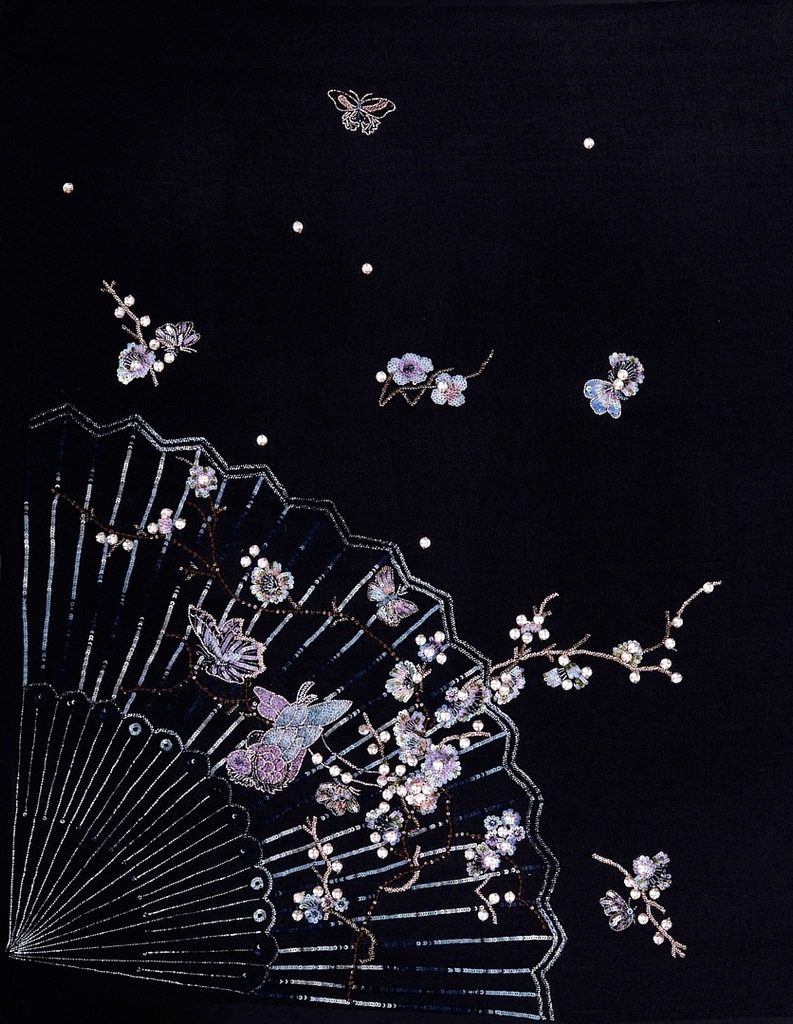
When you see the words hand embroidered on a luxury piece, two techniques are most likely behind it. Aari vs zardozi is one of the most searched comparisons in Indian embroidery, and for good reason. Both are ancient. Both are extraordinary. Both have shaped the way India is seen in global fashion. But they are made very differently, they look very different, and they tell very different stories.
This is a quick guide to both, with a look at the broader world of types of Indian embroidery they belong to, and why Blooming Orchid works exclusively in aari.
What Is Zardozi Embroidery?
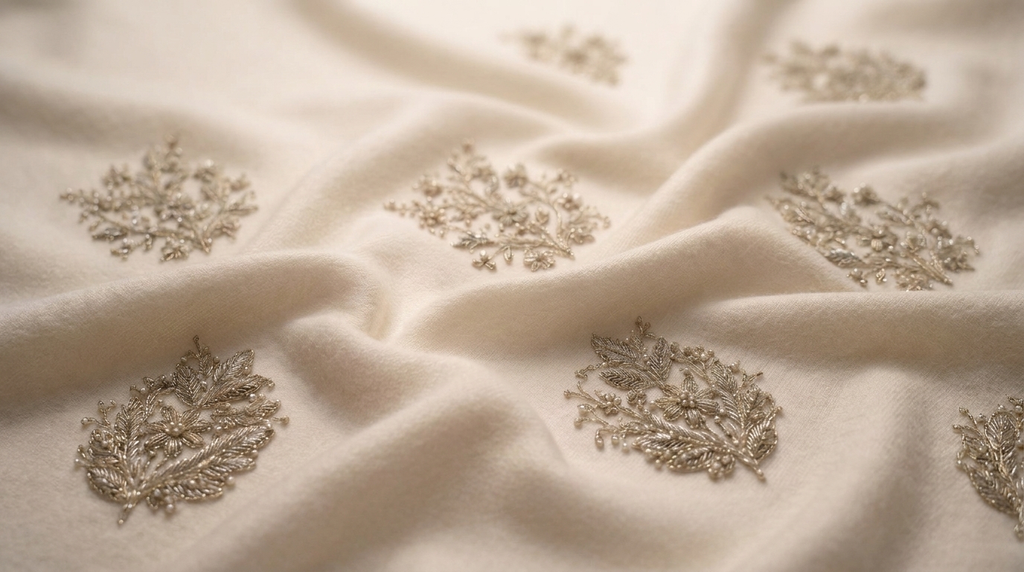
What is zardozi embroidery? The name comes from the Persian words zar, meaning gold, and dozi, meaning embroidery. It arrived in India through the Mughal courts and flourished under Emperor Akbar, becoming the embroidery of royalty and ceremony. Zardozi embroidery history is a history of power and grandeur , used to adorn royal garments, ceremonial objects, and the most prestigious occasions in the Mughal empire.
The technique uses metallic threads, traditionally real gold and silver, couched onto fabric using a needle to create a raised, three-dimensional surface. The result is heavy, regal, and unmistakably dramatic. Zardozi reached the Western world at the 1903 Delhi Durbar, when Lady Curzon wore a gown embroidered entirely in metallic threadwork and iridescent beetle wings. It remains the gold standard for bridal and ceremonial couture today.
What Is Aari Embroidery?
What is aari embroidery? Aari is a hook-needle embroidery technique that originated in India, practised across Kashmir, Rajasthan, and Lucknow for centuries. The name comes from the hooked needle used to create the stitch. The artisan works from below the fabric, pushing the hook up through the surface, catching the thread, and pulling it back through to form a continuous chain stitch.
The result is intricate, flowing, and extraordinarily precise. Florals, paisleys, geometric patterns, figurative motifs. The aari embroidery technique allows for a level of detail that is almost impossible to replicate by machine, and takes years of daily practice to master. Unlike zardozi, which sits heavily on the surface of the fabric, aari becomes part of the fabric itself. It moves with the wearer. It breathes.
Aari vs Zardozi: The Key Differences
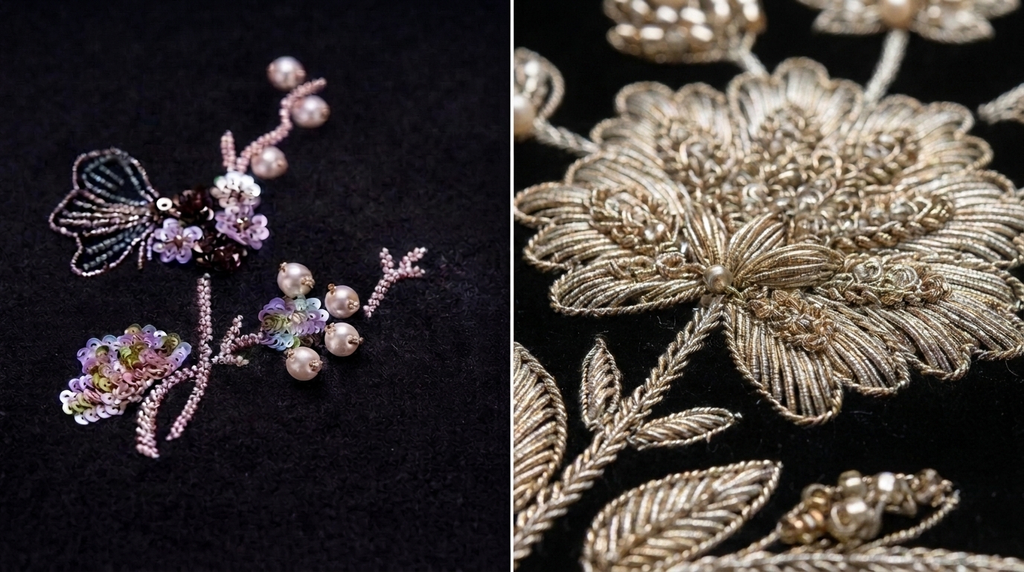
Aari Zardozi
Aari vs zardozi at a glance:
| Aari | Zardozi | |
| Origin | India , Kashmir, Rajasthan, Lucknow | Persia, refined in Mughal courts |
| Tool | Hooked aari needle | Couching needle and thread |
| Thread | Silk and metallic thread | Gold and silver metallic thread |
| Weight | Light to medium | Heavy |
| Look | Flowing chain stitch, intricate florals and paisleys | Raised, dimensional, regal metallic surface |
| Best For | Everyday luxury through to formal occasions | Bridal and ceremonial wear |
The clearest way to understand the difference is this: zardozi commands a room. Aari embroidery technique speaks to the person standing close enough to see it. Zardozi is the embroidery of ceremony. Aari is the embroidery of craft. Both are extraordinary. But they serve very different moments.
The Embroidery Technique Behind Every Blooming Orchid Piece
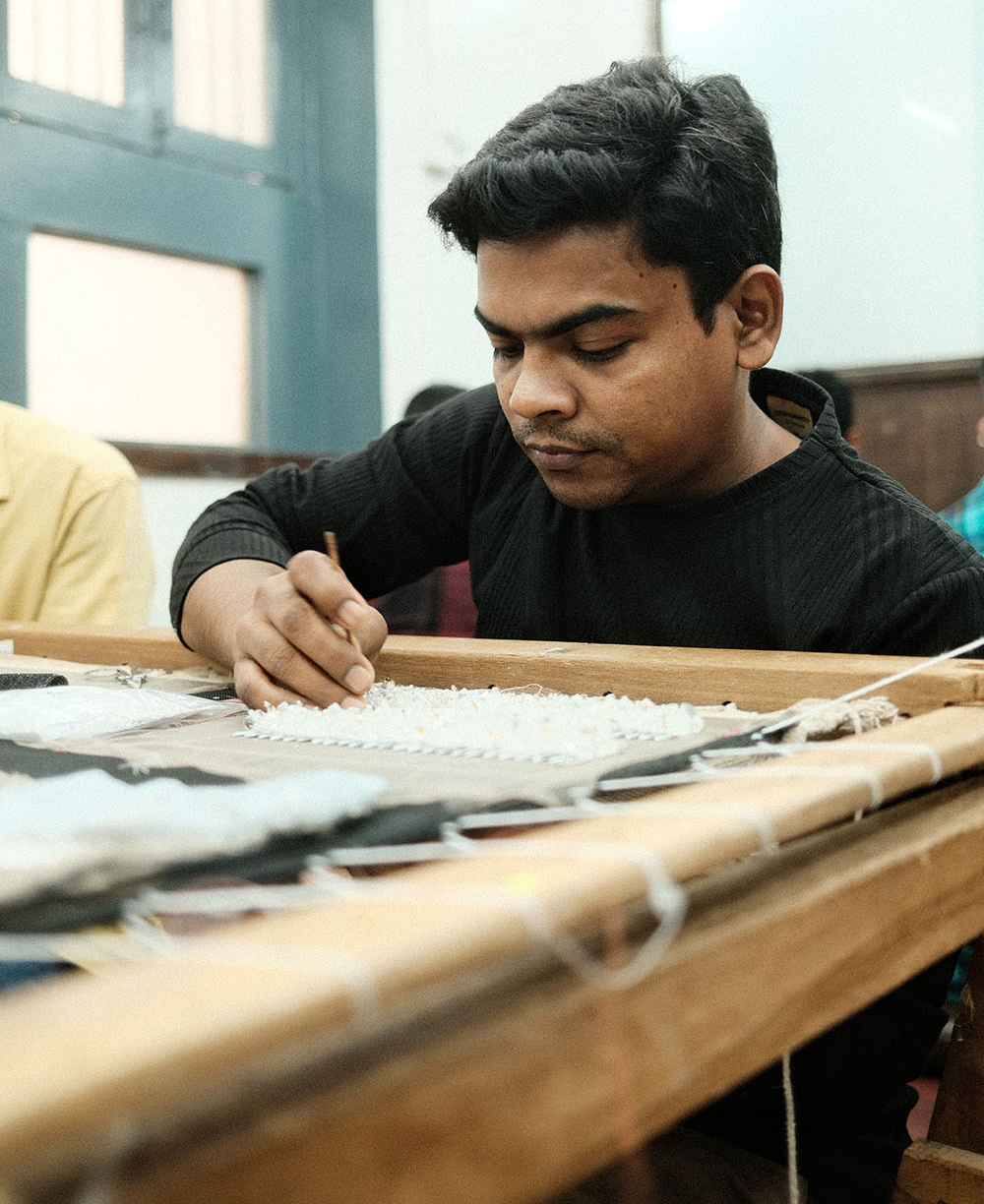
Every Blooming Orchid piece is hand-embroidered using aari embroidery, and that choice is intentional. Aari’s precision, fluidity and versatility make it the right technique for pieces designed to be worn and lived in, not just displayed at a ceremony. The same technique that appears at the Met Gala, at Cannes, and in the collections of Valentino and Dior is the technique behind every shawl and cape that leaves Blooming Orchid’s Mumbai family studio.
The studio has passed this knowledge down through generations. Each artisan has trained for years, often within family lineages, developing the kind of muscle memory and precision that aari demands. When you wear a Blooming Orchid piece, you are wearing that knowledge. Every chain stitch, every floral motif, every detail that catches the light is the result of a craft that cannot be hurried and cannot be replicated by machine.
Frequently Asked Questions
What is the difference between aari and zardozi?
The key difference in aari vs zardozi lies in the tool, the thread and the result. Aari uses a hooked needle to create a chain stitch from below the fabric, producing flowing, intricate designs in silk and metallic thread. Zardozi uses a couching needle to lay gold and silver metallic thread on top of the fabric, creating a raised, three-dimensional surface. Aari is lighter and more versatile. Zardozi is heavier and more ceremonial.
What are the main types of Indian embroidery?
The main types of Indian embroidery include aari, zardozi, kantha, chikankari, gota patti, phulkari, and mirror work, among others. Each originates from a specific region of India and carries its own tools, techniques and aesthetic. Aari and zardozi are among the most widely recognised internationally, particularly in luxury fashion and bridal couture.
What is zardozi embroidery used for today?
What is zardozi embroidery used for in modern fashion? Primarily bridal couture and high ceremony. Its zardozi embroidery history as the embroidery of Mughal royalty has translated naturally into its modern role at the top of the luxury market. You will find it on bridal lehengas, couture gowns, and ceremonial pieces where weight and drama are the point. It remains one of the most prestigious and labour-intensive embroidery traditions in the world.
Is aari embroidery better than zardozi?
Neither is better. They serve different purposes. Zardozi is the embroidery of grand occasions, of bridal moments, of ceremony. Aari is the embroidery of daily beauty, of pieces made to be worn again and again, of craft that moves with the wearer. Blooming Orchid works in aari because our pieces are designed to be lived in, not saved for a single day. For wearable, everyday luxury, aari is the right choice.
Conclusion
Both aari and zardozi are among the most extraordinary craft traditions India has produced. Both deserve to be understood, celebrated, and worn. Blooming Orchid chose aari because we believe that craft this precise and this beautiful should not be reserved for a single occasion. It should be part of how you move through the world, every day.
Explore Our Story to learn more about the Mumbai studio behind every piece, or discover the Collector’s Edition to see aari embroidery at its finest.