
You’ve found the dress. Now there’s this other decision sitting quietly on your list – shawl, or cape? It seems small until you’re standing in front of the mirror trying to picture the aisle walk, and suddenly it isn’t small at all. If you keep going back and forth on bridal shawl vs cape, you’re not overthinking it. The two pieces genuinely do different jobs, and once you see how, the choice tends to make itself.
The Shawl: Soft, Forgiving, Yours to Shape
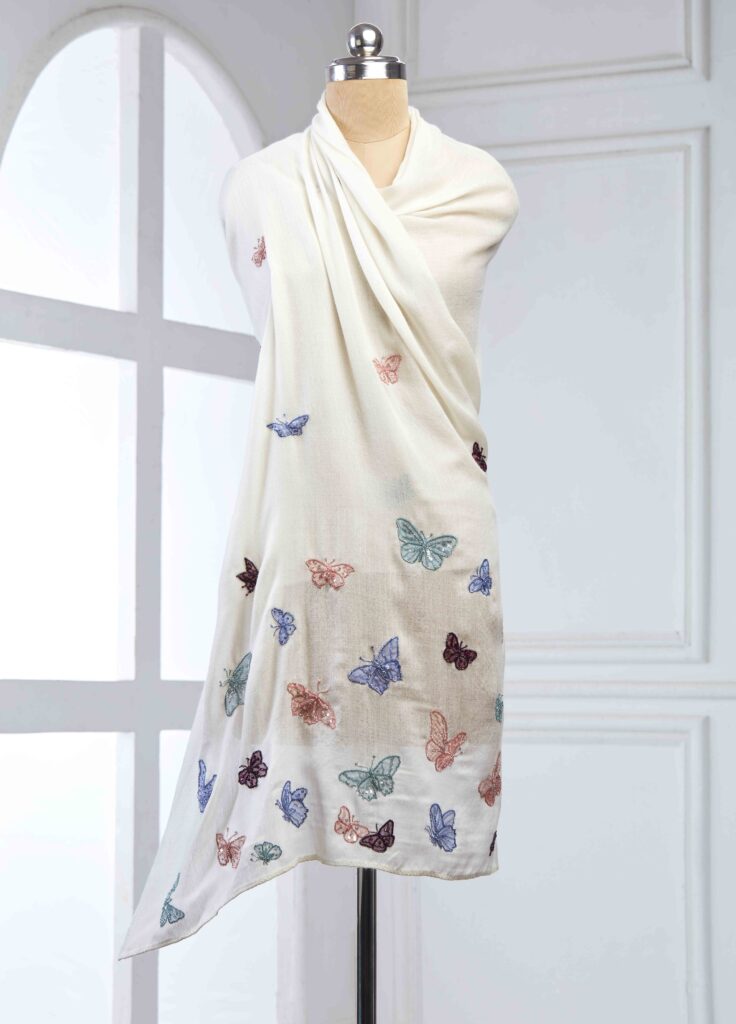
A bridal shawl is exactly what it sounds like a length of beautiful fabric, cashmere or silk or a fine wool blend, that you drape rather than wear. Knot it at the front, let it fall open down your back, wrap it around your arms when the church gets chilly. Nobody’s told a shawl what shape to be, which is exactly why it works. Because it isn’t structured, a bridal shawl for wedding dress pairing gets along with almost any neckline strapless, off-shoulder, a fitted mermaid cut that leaves no room for error.
There’s also something a shawl does that a cape doesn’t: it stays useful past the ceremony. Wear it for photos, drop it for dancing, throw it back over your shoulders when the venue empties out and the night gets cold. A hand-embroidered piece, stitched the slow way over weeks in our atelier, isn’t something you retire after one day either brides come back to theirs as an evening wrap for years, and more than a few have passed one down.
The Cape: Structured, Deliberate, Built to Be Seen
An embroidered bridal cape asks for more commitment and gives you more drama in return. It sits at the collarbone, echoes a Bardot neckline, and either clasps at the front or opens into a sharp V down your back. Where a shawl moves with you, a cape holds its line. Nothing to re-tuck, nothing shifting mid-ceremony just one clean shape from the moment you step out.
That’s the whole appeal. Picture a long aisle, doors opening, fabric trailing a beat behind you – that’s a cape doing its job. Embroidered florals or metallic threadwork turn it into more than a cover-up; it becomes the second half of your look, not an afterthought thrown over it.
So What Actually Separates Them
Boil down every bridal cape vs shawl comparison and you’re really weighing three things.
Warmth is the first. Cashmere shawls genuinely keep you warm through an outdoor ceremony or a late reception; capes are cut lighter and built for shape, not for fighting off a chill, so they suit milder weather or indoor venues better.
Then there’s silhouette. A shawl bends to however you’re wearing it in that moment. A cape doesn’t bend – it holds one fixed, sculptural line, which is exactly why it photographs so consistently well.
And versatility. A shawl can follow you from ceremony to cocktail hour to the dance floor, worn three different ways or none at all. A cape mostly lives in the first hour of the day – the entrance, the portraits – then steps aside once things loosen up.
Making the Call
Cold-weather wedding, or any outdoor stretch on the schedule? Go with the shawl – it’s the one that actually keeps you warm and adjusts as the day changes shape. Simple gown, minimal neckline, and you want one big dramatic beat without touching the dress itself? That’s the cape’s moment.
Planners see the same pattern with clients working through a wedding shawl or cape decision: shawls for brides who want one piece to carry the whole day, capes for brides building toward one editorial entrance shot. Plenty skip the either-or – cape for the aisle, shawl once it cools off later that night.
A Few Things Worth Knowing Before You Decide
Let fabric follow the season – cashmere or wool shawls once it’s cold, lighter silk capes for spring and summer. If your gown already carries heavy lace, keep the embroidery on your shawl or cape tonal rather than competing with it; if the dress is simple, let the embroidery do more talking. And try it on with the actual gown before the day arrives – drape sits completely differently once there’s a full skirt or train underneath it.
Don’t forget the back half of your day either. A shawl is easy to reach for again later if you want photos once the light changes. A cape works best as a one-scene piece – let it do its job during the aisle walk and the formal portraits, then set it down once dancing starts.
There’s No Wrong Answer Here
Bridal shawl vs cape isn’t really a competition it’s just about which one fits your dress, your season, and the moment you’re trying to create. Either way, choose something hand-finished, not mass-produced; it’s the difference between a piece that looks intentional and one that looks borrowed. Take a look through Blooming Orchid’s Couture Cape Collection and our shawl designs, and see which one feels like yours.
Frequently Asked Questions
1. What fabric should I choose for a wedding shawl or cape based on the season?
For cold-weather weddings, choose cashmere or wool for real warmth; for spring and summer, choose a lighter silk. The fabric matters more than the style itself — a beautiful cashmere piece in July or a thin silk one in December will fight the season instead of working with it.
2. Should the embroidery on my cape match my wedding dress or stand out?
If your gown already has heavy lace or detailing, keep the cape or shawl’s embroidery tonal so it doesn’t compete with the dress. If your gown is simple, let the embroidery be the statement piece instead.
3. Can I wear my wedding shawl again after the wedding?
Yes, unlike a cape, which mostly lives in the ceremony and portrait window, a hand-embroidered shawl works as an evening wrap for years afterward, and many brides pass theirs down as a family piece.